Children and young people expand their imagination through creative kids art projects that prioritise open exploration, sensory engagement and storytelling over finished products. These activities unleash divergent thinking by encouraging experimentation with materials, chance outcomes and person-led narratives, which in turn supports emotional regulation, fine motor development and confidence. Readers will learn what kinds of creative art activities spark imaginative thinking, which developmental and therapeutic benefits to expect, and practical project ideas to use at home, in classrooms or during mentoring sessions. This guide also explains how art projects are used in youth art therapy in Australia, offers age-appropriate techniques and materials guidance, and presents specific resources and support available from Ascend Youth to connect families with allied health and creative programs. First we define creative art activities and the mechanisms through which they spark imagination, then we map benefits to developmental goals, outline therapeutic uses and provide easy, effective projects and facilitation tips.
Creative art activities are open-ended processes that prioritise exploration, choice and sensory discovery over prescriptive outcomes, and they spark imagination by allowing children to test ideas, remix materials and invent narratives. The mechanism is simple: when materials are non-prescriptive and prompts are ambiguous, young people generate multiple solutions and narratives, strengthening divergent thinking and symbolic play.
This section lists the main types of projects that invite imaginative thinking, shows how easy craft ideas build problem-solving, and outlines which materials best support open-ended creation. Understanding these categories helps adults choose projects that match a child’s developmental stage and therapeutic goals, and the next subsection categorises imaginative project types with brief examples.
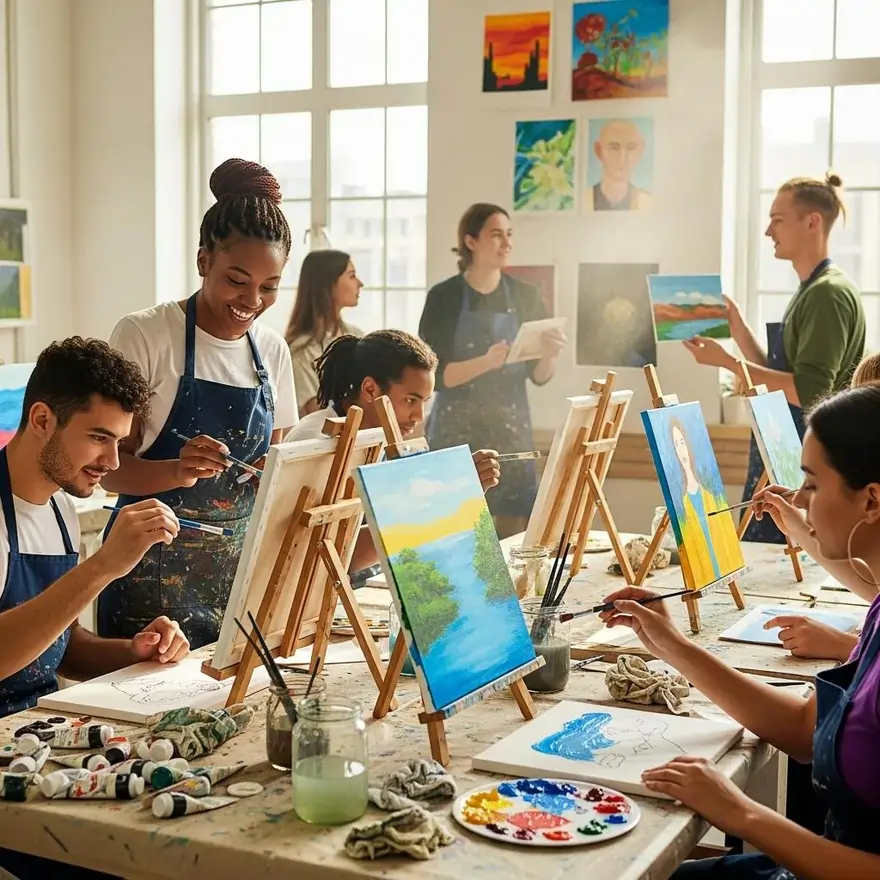
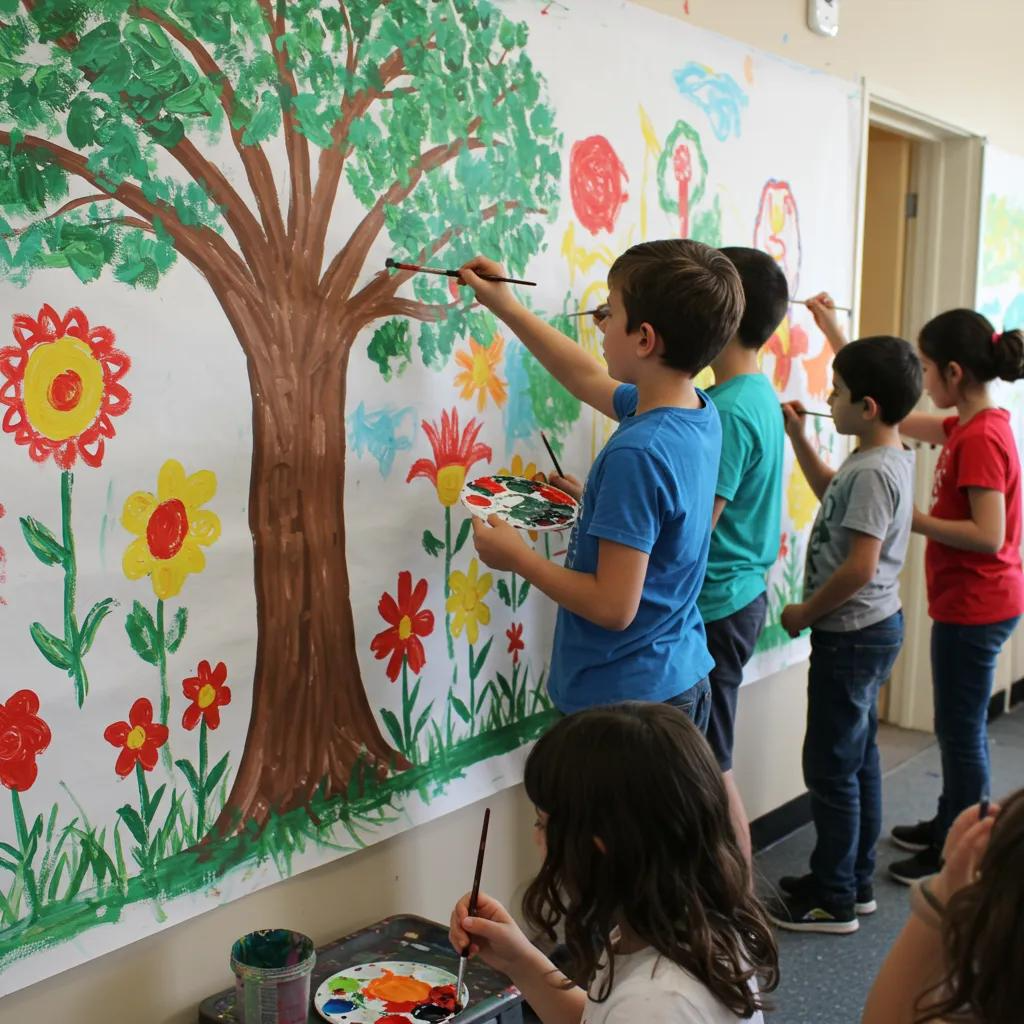
Process art focuses on experience, mixing paint, texture and movement, so children invent uses for materials rather than copy a model, and this unpredictability fosters creative risk-taking. Mixed-media projects combine meronyms like paper, pastels and recycled materials to invite layering and metaphor, while storytelling prompts pair visual creation with narrative building to extend imagination into character and plot development. Collaborative murals build social imagination as peers negotiate roles and visual choices, which leads naturally into how simple craft tasks support problem-solving skills.
Simple craft activities develop creativity and problem-solving by posing small constraints that invite planning, iteration and improvisation, and by giving children opportunities to test hypotheses about materials and structures. For example, asking a child to make a wearable hat from recycled paper sets a constraint that requires measurement, attachment techniques and aesthetic choices, which cultivates sequencing and adaptive thinking. These micro-challenges reward trial and error, strengthening causal reasoning and resilience when solutions don’t work the first time. The cognitive skills developed through such crafts transfer to broader tasks like planning and flexible thinking, and this leads into selecting materials that best support those goals.
Choosing materials with tactile feedback, forgiving marks and easy manipulation supports imagination by reducing fear of failure and increasing sensory engagement; watercolours, pastels, pencils, clay and recycled materials are core meronyms that achieve these aims. Watercolours support fluid, explorative marks and are excellent for mood-based experiments, while clay offers grounding sensory input and sculptural problem-solving opportunities. Dry media like pastels and pencils offer precise mark-making for teen identity work or detailed storytelling, and recycled materials boost creativity by requiring repurposing and design choices. Age-appropriate combinations of these mediums help scaffold complexity and lead naturally to understanding the developmental benefits of art for emotional wellbeing.
Creative art projects deliver measurable benefits across emotional regulation, fine motor development, cognitive growth and social confidence by providing both practice and safe contexts for expression. The mechanisms include non-verbal externalisation of feelings, sensorimotor repetition that refines coordination, and collaborative problem-solving that strengthens social skills. Below is a compact table mapping common activities to developmental and therapeutic outcomes so families and support workers can match goals to practice. After the table, we outline practical ways to observe and encourage those benefits in everyday art practice.
Activity Type | Developmental or Therapeutic Outcome | Typical Use Case |
Painting (process) | Emotional expression & regulation | Use open washes and colour mixing to explore mood |
Clay modelling | Grounding & fine motor control | Squeezing, forming and smoothing to calm and focus |
Collage & mixed media | Problem-solving & narrative construction | Combining images to tell a personal story |
Drawing & journaling | Identity work & reflective processing | Regular sketch journaling to track feelings |
This table helps practitioners select activities aligned to goals such as regulation, motor skill practice or identity exploration. The next subsection describes how art supports emotional regulation and self-expression in more depth.
Art supports emotional regulation by externalising internal states into tangible forms that a young person can shape, name and revisit; this reduction in immediacy helps lower physiological arousal and makes feelings discussable. Activities such as emotion-wheel painting or creating “feeling masks” give structure to naming emotions and practising stabilising strategies like paced breathing during art-making. The non-verbal language of art is especially helpful for adolescents or neurodiverse youth who find verbalisation difficult, enabling safe processing and gradual disclosure. Integrating reflective prompts after art-making, such as “what colour felt strongest?” supports linking expression to insight and leads into mapping motor and cognitive gains from creative play.
Research indicates that art-making can be a powerful tool for managing and expressing emotions.
Art-Making for Emotion Regulation: A Narrative Synthesis
This review seeks to identify and analyse studies investigating art-making as a means of emotion regulation. The objective of this review is to synthesise the current body of knowledge regarding the use of art-making as a strategy for emotional regulation.
Emotion regulation strategies and effects in art-making: A narrative synthesis, H Gruber, 2018
Creative play enhances fine motor skills through repeated, purposeful manipulation of small tools and materials, cutting, threading, brush control and sculpting refine dexterity and bilateral coordination. These sensorimotor repetitions also underpin cognitive growth: planning a composition, sequencing steps and evaluating outcomes translate into executive functions like working memory and cognitive flexibility. Activities such as threading beads, detailed collage or small-scale clay modelling are practical for targeting hand strength and precision while offering cognitive complexity. Observing incremental improvements in task sequencing or tool control provides clear evidence of motor and cognitive transfer that can then be reinforced with slightly more challenging projects.
Engaging in arts and crafts activities is a well-established method for improving fine motor abilities in children.
Enhancing Fine Motor Skills in Children via Arts and Crafts
Fine motor skills in children can be improved through arts and crafts. Activities involving art and craft can serve as a medium for self-expression or as an integral part of aesthetic and creative development. As art and craft activities are intrinsically linked to the creation of art
Art and Craft Activities for Early Children To Improve Fine Motor Ability, M Mawardah, 2023
Art builds confidence and resilience by creating repeated opportunities for mastery, visible achievement and social recognition within safe, scaffolded experiences that tolerate mistakes. Structured projects that include stages, planning, making, reflecting and celebrating, allow young people to experience progress and to own outcomes, which strengthens self-efficacy. Group exhibitions, collaborative murals or peer-sharing sessions foster social resilience by normalising diverse outcomes and encouraging mutual support. Simple reflection prompts like “what did I learn?” and “what would I try differently?” convert creative success into transferable resilience skills and prepare youth for more explicit therapeutic or mentoring work.
Youth art therapy in Australia applies creative projects as therapeutic tools that promote expression, processing and skill-building within trauma-aware and developmentally appropriate frameworks. Practitioners use non-verbal modalities to help young people externalise feelings, practise coping strategies and rehearse social interactions in a contained setting, often linking art tasks to therapeutic goals. Sessions typically blend process-focused activities with reflective dialogue, and interventions are adapted for age, neurodiversity and presenting concerns such as anxiety or low mood. The following subsection outlines specific anxiety-focused techniques and then introduces how community organisations integrate art into mentoring and allied-health pathways.
Art therapy supports anxiety reduction by offering sensorimotor grounding and symbolic distance between the young person and distressing content, enabling safe exploration of triggers and coping responses. Techniques such as mandala drawing, grounding clay manipulation and breath-synced mark-making help lower arousal and reconnect youth to present-moment sensations. These approaches are trauma-informed when facilitators offer choice, predictable routines and clear boundaries, which increase a sense of safety for vulnerable participants. Combined with reflective questioning, art tasks build coping repertoires that generalise beyond sessions, and this sets the stage for describing how community programs integrate creative classes into broader support.
Ascend Youth runs Art Classes that are described in available local information as combining creative practice with therapeutic and mentoring aims; these offerings reflect the organisation’s broader mission to “Offer therapy and mentoring for youth”. Their classes are reported to run on Mondays and include drawing, colouring and painting with mediums such as watercolours, pastels, pencils and acrylics. In practice, these sessions blend skills training, fundamental to advanced techniques, with activities that nurture creativity, self-expression and confidence, while working alongside allied health professionals and mentors. This community-oriented integration demonstrates how service providers can coordinate creative arts with allied health to create stability and developmental opportunity for young people.
Teen-focused art activities emphasise autonomy, identity exploration and peer connection through projects that allow personal voice and choice, such as mixed-media self-portraits, zine-making, collaborative murals and expressive journaling. These activities support identity work by combining visual symbolism with written reflection, enabling teens to experiment with narrative and public/private boundaries safely. Projects that include optional public sharing or exhibitions provide structure for social feedback while preserving agency over disclosure. Facilitators should scaffold technical skills and offer clear prompts that invite deeper reflection, which prepares participants to integrate insights into mentoring and allied health goals.
Practical, easy-to-run projects encourage imagination by using accessible materials, short facilitation prompts and open-ended outcomes that can be adapted across ages and goals. The list below offers several projects with a one-line materials list and a short facilitation cue suitable for home, classroom or support-worker settings. After the list we present a quick-reference table matching each project to therapeutic goals for rapid selection by carers and practitioners.
Each project above can be shortened or extended to fit time and supports both imaginative play and reflection. The next element is a table that maps these projects to therapeutic goals for quick decision-making.
Project | Basic Materials | Therapeutic Goal |
Process Paint Play | Watercolours, paper, salt | Emotional expression & sensory exploration |
Feelings Collage | Magazines, scissors, glue | Naming emotions & narrative sense-making |
Clay Grounding Sculptures | Clay, simple tools | Grounding, fine motor control |
Story Stones | Smooth pebbles, paints | Storytelling, social play |
Mixed-Media Self-Zine | Paper, pens, collage bits | Identity exploration & autonomy |
This table gives a practical shortcut for support workers and families to choose activities aligned with emotional regulation, confidence-building or fine motor practice. The following subsections detail emotion-focused projects, confidence-boosting DIY crafts and facilitation tips for non-artists.
Emotion-focused projects invite naming and externalising feelings through accessible materials and simple prompts that encourage metaphor and colour association. Examples include colour-mood paintings where each child chooses colours for a mood, feelings collages using cut-out images to represent inner states, and “emotion jars” filled with mixed media to represent shifting feelings. Facilitation prompts such as “show me how big that feeling feels on paper” or “pick two colours that would help you feel calm” encourage naming and regulation without pressuring verbal detail. These approaches make emotions tangible and containable, preparing young people for guided reflection and coping practice.
DIY projects that culminate in a finished piece for sharing or display are effective for building confidence because they create a visible marker of achievement and a platform for reflection. Portfolio projects, small exhibitions within a group, or creating a personal zine allow youth to plan, execute and celebrate work, with emphasis on choice and ownership. Facilitation steps include clear milestones, supportive feedback and a brief reflection activity such as “what am I proud of?” Celebrating progress, even in modest ways, converts creative risk-taking into measurable gains in self-efficacy and motivation.
Non-artists can still facilitate meaningful creative experiences by setting up predictable spaces, offering limited material choices and using scaffolded prompts that encourage agency rather than instruction. A simple checklist:
Conversation prompts such as “tell me about this part” or “what would you like to try next?” help deepen reflective practice without leading content. These facilitation habits increase the therapeutic value of art sessions and make it easier for families and support workers to sustain creative practice over time.
Creative arts in mentoring foster relationship-building, goal-setting and reflective practice by providing shared tasks that prompt conversation and joint problem-solving. Art-based mentoring activities that foster connection and growth include:
These activities are structured to build trust and to reveal strengths in context, which naturally leads to techniques for enhancing communication during and after creative tasks.
Paired projects, collaborative murals, goal-mapping and skill-exchange tasks work because they combine creative action with explicit relational goals such as turn-taking, recognition and shared problem-solving. For example, a paired collage where each person must add three elements chosen by the other encourages perspective-taking and appreciative noticing. Goal-mapping art uses images, symbols and timelines to make abstract aspirations concrete and negotiable, helping mentors co-create achievable steps. These structured activities can be adapted to session length and individual needs and transition into tools for enhancing mentor-mentee communication.
Creative arts provide non-verbal scaffolds that ease conversation by giving mentors concrete artefacts to reference, which often reduces anxiety and defensiveness in youth. Sentence prompts such as “what part of this shows where you are now?” or “what would change to move you forward?” help connect visual metaphors to action planning. Debrief templates that alternate descriptive observation, reflective questions and goal-setting support focused dialogue without interrogative pressure. These communication strategies turn art outcomes into springboards for sustained mentoring conversations and measurable developmental steps.
Presenting anonymised success stories in a simple template helps organisations capture impact while maintaining privacy; a three-part template, challenge, art intervention, outcome, shows clear causal pathways between creative practice and change. Metrics to include are participation rates, observed changes in engagement or mood, and qualitative reflections from participants about confidence or coping skill use. Using consented testimonials and simple pre/post measures allows mentors and coordinators to demonstrate program value to families and funders. Framing outcomes this way makes impact tangible and supports scale-up of arts-based mentoring initiatives.
Selecting materials and techniques should be guided by age-appropriateness, therapeutic goals and safety, emphasising sensory affordances, ease of cleanup and ecological options. Below is a comparative table linking common mediums to best use cases and a short bulleted checklist for quick matching of goals to materials. Attention to sensory needs and simple adaptations helps include neurodiverse participants and keeps sessions productive and safe.
Medium | Best Therapeutic/Developmental Use | Best Use Case |
Watercolours | Flow and mood exploration | Quick wash exercises for emotion-mapping |
Acrylics | Bold, achievement-focused projects | Durable pieces for exhibition |
Pastels & Pencils | Detail and identity work | Self-portraits and journaling |
Clay | Grounding & sensory regulation | Slow, repetitive shaping activities |
Recycled Materials | Problem-solving & creativity | Design challenges with constraints |
This table clarifies which mediums align with common objectives and offers recommendations for accessibility and cleanup. The checklist below helps facilitators match a goal to a medium quickly.
These quick matches streamline preparation and ensure materials serve the intended developmental purpose. The following subsections describe medium-to-goal mappings, age-adapted techniques and creative reuse of recycled materials.
Different mediums have distinct affordances: clay offers proprioceptive grounding and bilateral hand work, watercolours invite fluid expression and tolerance of unpredictability, and collage fosters sequencing and symbolic assembly. Mapping medium to goal clarifies selection, choose clay for anxiety reduction, watercolours for mood exploration and collage for narrative construction. Accessibility notes include offering thicker grips for tools, non-toxic materials and tidy-up routines to support sensory-sensitive participants. Recognising the therapeutic strengths of each medium helps practitioners design purpose-driven sessions.
Techniques should match developmental capacities: early years benefit from large gestures, sensory trays and gross-motor mark-making, primary-aged children gain from stepwise projects like collage and simple sculpting, and teenagers respond to mixed-media, reflective journaling and fine-detail techniques. Facilitation tips include offering choice architectures, predictable session structures and optional reflection prompts tailored to age. For neurodiverse children, provide sensory breaks, visual schedules and clear material boundaries to maintain engagement and safety. These adaptations ensure art remains accessible and therapeutically potent across ages.
Recycled and natural materials expand creative problem-solving while modelling sustainability; items like cardboard, fabric scraps, leaves and shells become rich resources for construction, texture studies and storytelling prompts. Suggested projects include cardboard city-building, texture rubbings with natural objects and fabric collage, each offering low-cost, high-creativity opportunities. Safety notes: inspect materials for sharp edges, wash natural finds and pre-sort materials for hygiene. Creative reuse both reduces material costs and invites design constraints that boost imaginative solutions.
Ascend Youth is an Australian organisation dedicated to empowering young lives through support, education and empowerment and their service mix includes education, allied health and creative arts programs that aim to combine therapeutic and mentoring approaches. Publicly available information indicates that Art Classes are listed among their services and that classes are held on Mondays offering drawing, colouring and painting with mediums such as watercolours, pastels, pencils and acrylics. These programs are presented as part of a holistic offering that links allied health services, Speech Therapy, Occupational Therapy, Youth Counsellors and Psychology, with creative activities to nurture creativity, self-expression and confidence. The next subsections explain how families can look for enrolment details, the expected learning outcomes and where to find allied health supports.
Families seeking enrollment information should look for program pages that describe schedules, class content, age ranges and referral pathways, noting that Art Classes have been described as running on Mondays and include drawing, colouring and painting with a range of mediums. When exploring options, check for statements about integration with allied health and mentoring so you understand how creative classes support broader therapeutic goals. Contact routes and enrolment steps are typically listed under program or services pages where schedule details and session objectives appear. Reviewing these sections will help families determine suitability and next steps for registering a young person.
Learning outcomes reported for Ascend Youth’s art offerings emphasise nurturing creativity, self-expression and confidence as part of a therapeutic and mentoring framework, with skills training from fundamental to advanced levels. Classes use multiple mediums, watercolours, pastels, pencils and acrylics, to build technical competence alongside expressive opportunities, supporting fine motor development and identity exploration. The allied health linkages described in available information suggest that art activities are coordinated with broader supports, creating opportunities for targeted developmental gains and emotional regulation. These outcomes make creative classes suitable for families seeking an integrated approach to youth wellbeing.
Creative activities have been shown to positively impact the overall health and well-being of children and young people.
Creative Activities Enhance Children’s Health and Well-being
The effects of participation in creative activities on the health and well-being of children and young people: a rapid review of the literature
The effects of participating in creative activities on the health and well-being of children and young people: a rapid review of the literature, 2013
Local allied health supports that commonly complement creative arts include Speech Therapy, Occupational Therapy, Youth Counsellors and Psychology; seeking integrated services helps ensure arts-based practice aligns with therapeutic goals. Look for providers who describe collaborative work with creative programs or who list art-based interventions among treatment options, and use professional association directories to locate accredited practitioners. Ascend Youth is noted as a coordinating organisation that combines education, allied health and creative programs, which can help families navigate referrals and combined support. When considering services, prioritise consented collaborative care and clear communication between creative facilitators and allied health professionals.
© 2025 Ascend Pty Ltd | Privacy Policy | Created and Managed by Perceptiv